



17-year-old Antoni asks how psychiatry changed from coercion to care

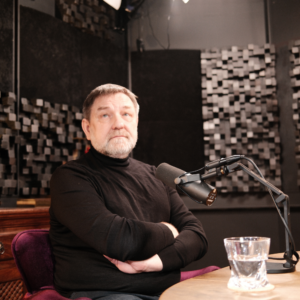
Dr Maciej Dariusz Myszka, psychiatrist
12 January 2026
‘We still cannot enter another person’s mind,’ says psychiatrist Dr Maciej Dariusz Myszka
Psychiatry has long occupied a complicated place in public imagination, shaped as much by film and literature as by medicine itself. Works such as One Flew Over the Cuckoo’s Nest or dramas set around the Nuremberg trials have helped define how many people imagine psychiatric institutions: hierarchical, coercive and deeply entangled with power. Yet that image often says more about the past – and about cultural fears – than about psychiatry as it is practised today.
In this context, psychiatrist Dr Maciej Dariusz Myszka approaches the subject from both a clinical and historical perspective. In conversation with Harbingers’ Magazine, he reflects on how psychiatry has changed since the mid-twentieth century: from a discipline with few effective treatments and a strongly paternalistic model of care to one shaped by psychopharmacology, patient autonomy and a growing shift away from the long-term psychiatric hospital.
At the same time, Myszka is careful not to present this development as a simple story of progress. Psychiatry, he argues, remains limited by one fundamental fact: no doctor can directly access another person’s thoughts. Diagnosis still depends above all on conversation, observation and interpretation, which means uncertainty can never be fully removed – especially in forensic cases, where psychiatry intersects with the law and questions of criminal responsibility.
That tension lies at the centre of the interview. Speaking about mental disorders, violent crime, public stigma and the future of the field, Myszka returns repeatedly to the same idea: psychiatry has changed enormously, but its most difficult questions remain the ones that force medicine, morality and society into direct confrontation.
VIDEO
Antoni Popczyński: Harbingers’ Magazine has recently covered films that engage with mental health and psychiatry, including One Flew Over the Cuckoo’s Nest and Nuremberg. How has psychiatry changed since the 1940s and 1950s?
Dr Maciej Dariusz Myszka: It changed in every possible sense. The theoretical understanding of mental disorders is completely different today, and so is treatment. Just as importantly, the social attitude toward patients has changed. Back then, psychiatrists were often the only people speaking on behalf of patients. Today there is a much stronger emphasis on patient autonomy and self-determination.
In films about that period, psychiatry often appears very physical and invasive: lobotomy, insulin shock therapy, electroconvulsive treatment. How did approaches like these disappear?
Lobotomy belongs to history. But what is important is that diagnosis itself has changed less than many people assume. Despite advances in neuroscience, psychiatry still relies mainly on careful interview and observation. Brain scans can help rule out things like stroke or tumours, but they do not tell us directly that someone has schizophrenia or obsessive-compulsive disorder.
What changed most dramatically was treatment. From the late 1940s onward, psychiatry began to gain medications that could genuinely reduce symptoms. Before that, biological treatment was extremely limited. Psychopharmacology transformed the field.

You mentioned One Flew Over the Cuckoo’s Nest. Many people still imagine psychiatry through films like that. How misleading is that image today?
Very misleading. Everything is different: the hospital, the relationship between staff and patients, the treatment itself. The old model was deeply hierarchical. Today, even though psychiatry remains a medical discipline, those relations are no longer so feudal.
There is also a visible difference in patients’ condition. Older antipsychotic drugs often caused severe stiffness and movement problems. Wards could look, in very crude terms, almost like “zombie factories”. Contemporary medications do not produce those effects in the same way. That has changed both treatment and how psychiatry is perceived.
Why do mental disorders fascinate society so much? And why are they so often linked with evil or crime?
Because the human mind fascinates us. Everyone has an inner life, but some people reflect more deeply on how thought, feeling and perception work. Mental disorders also attract attention because some of them are dramatic, strange, difficult to understand.
But the link between mental illness and crime is often exaggerated. Even proportionally, people without mental illness commit crimes more often. Of course there are spectacular crimes committed by mentally ill individuals, and those cases receive enormous attention. But very often what people have in mind is not psychosis at all, but antisocial personality – psychopathy – which we understand differently. That is not the same as someone living in a psychotic reality.
In the interview we’ve talked a lot about criminal responsibility. How do psychiatrists actually assess whether someone was sane at the time of an offence?
First, sanity or insanity can only be assessed in relation to a specific act. In normal life we assume everyone is legally responsible. The question only arises when someone has done something and we ask whether, at that moment, they understood what they were doing and could control their behaviour.
The difficulty is obvious: I cannot enter another person’s mind. I only know what someone says, what I observe, and what can be reconstructed from history and circumstances. People can also try to simulate symptoms. That is why, in difficult cases, courts may order forensic psychiatric observation over a longer period in hospital. You cannot convincingly fake severe mental illness forever.
Harbingers’ Weekly Brief
Subscribe to the Harbingers’ Weekly Brief, a newsletter written by the editorial board of Harbingers’ Magazine, the world’s youngest newsroom, delivered to your inbox every Monday morning.
![author_bio]()
![author_bio]()


What happens when someone is found not criminally responsible? Many people assume it means they simply avoid punishment.
That is one of the biggest misunderstandings. If a person committed a serious prohibited act and there is a risk of repetition, the court can order secure psychiatric detention. That person is not sent to prison, but to a psychiatric institution with different levels of security.
It is treatment, but it can resemble confinement. The goal is to remove the symptoms that led to the act. Some patients leave after improvement; some stay a very long time. There is regular review, but there is always risk involved, because again – we cannot know another person’s mind with absolute certainty.

Edited by:

© 2026 The Oxford School for the Future