




logo

Harbingers’ Magazine is a weekly online current affairs magazine written and edited by teenagers worldwide.

harbinger | noun

har·​bin·​ger | \ˈhär-bən-jər\

1. one that initiates a major change: a person or thing that originates or helps open up a new activity, method, or technology; pioneer.

2. something that foreshadows a future event : something that gives an anticipatory sign of what is to come.

cookie_image

We and our partners may store and access personal data such as cookies, device identifiers or other similar technologies on your device and process such data to personalise content and ads, provide social media features and analyse our traffic.

17 April 2026

2026 fuel crisis: Sri Lanka’s second economic crisis in a decade

author_bio
Hesandi Ravisinghe in Galle, Sri Lanka

Article link copied.

slide image

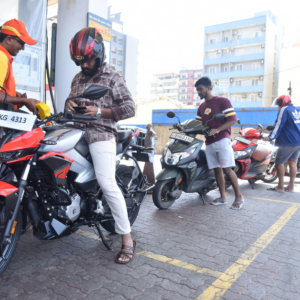
Sri Lanka’s government introduced a fuel-rationing system in mid-March.

Picture by: Xinhua | Alamy

The ongoing US–Israel war with Iran has posed a threat to global oil supplies, affecting many countries including Sri Lanka.

Ships passing through the Strait of Hormuz carry a fifth of global oil supplies, and since Iran officially closed the waterway on 2 March, the price of fuel has skyrocketed.

Sri Lanka purchases most of its crude oil from the Middle East (also known as West Asia). News about the war triggered the mass panic buying of fuel in Sri Lanka, which had previously suffered a fuel shortage amid the widespread and serious economic crisis of 2022.

The panic buying occurred despite the fact that the Ceylon Petroleum Corporation (CPC) had stated that the island had enough fuel stocked to last until the end of April. Since the start of the war, the price of fuel has risen by 33%.

To preserve fuel, on 15 March the government declared every Wednesday a national holiday for the public sector and schools. Making Monday or Friday a holiday would mean that the government offices would be closed for three days straight, which is why Wednesday was picked instead. (This measure was cancelled on 8 April, to allow essential services to continue without interruption.)

At the same time, a QR code-based fuel rationing system,first implemented during the 2022 economic crisis, was brought back.

This allocates a weekly limit of 5 litres per motorcycle, 15 litres per car, 60 litres per bus and 200 litres per lorry. Vehicles where the last number on the licence plate is an odd number are allowed to buy fuel on odd-numbered dates while those with an even number are allowed to buy fuel on even-numbered dates.

The rising fuel costs increased the price of delivery services, taxis and buses. The price of bus tickets has increased by 12%, affecting one of the only modes of transport for people on lower incomes.


View this post on Instagram


A post shared by Harbingers’ Magazine (@hrb.mag)

An official from the Ministry of Energy stated that the increase in fuel prices was less than the price hike in the international market, effectively subsidising the cost of fuel for Sri Lankan citizens. He explained that if the price of fuel was increased to match the entire price hike, transportation would be too expensive, meaning that people would not be able to go to work and would lose their jobs.

Since the US loosened sanctions hindering other countries from buying Russian fuel, Sri Lanka reached an agreement with Russia to purchase its crude oil, and the first shipment is expected to arrive in mid April.

Meanwhile, Sri Lanka turned down the offer from Iran to supply the country with Iranian fuel, due to not having the proper means of transportation.

Sri Lanka imports about 60% of its total energy supply, most of which is transported through the Strait of Hormuz. Moreover, the country has no storage capacity beyond one month, as it has only three storage tanks across the whole island.

President Anura Kumara Dissanayaka told Parliament that Sri Lanka would be building six new storage tanks, as well as replacing two decommissioned oil tanks with new ones. This decision would add ten more days to the existing fuel storage capacity and would cost approximately 4.77 billion Sri Lankan rupees ($15mn).

Written by:

author_bio

Hesandi Ravisinghe

Science Section Editor 2026

Galle, Sri Lanka

Hesandi Ravisinghe, born in 2009 in Galle, Sri Lanka, joined Harbingers’ Magazine as a contributor to the Sri Lankan Newsroom in January 2024. After completing the writing course, she became a regular writer, focusing on wildlife and science.

Her strong interest in nature and consistent work with the magazine led to her appointment as Science Section Editor in March 2025, a role she continues to hold in 2026. She also serves as Editor of the Nepali Newsroom.

Hesandi has a deep interest in art, nature and wildlife, particularly elephants, leopards and birds.

In her free time, she enjoys painting and travelling.

Hesandi speaks English and Sinhala and is currently learning Indonesian.

Edited by:

author_bio

Lukas Abromavicius

Economics Section Editor 2026

Sevenoaks, United Kingdom

sri lankan newsroom

🌍 Join the World's Youngest Newsroom—Create a Free Account

Sign up to save your favourite articles, get personalised recommendations, and stay informed about stories that Gen Z worldwide actually care about. Plus, subscribe to our newsletter for the latest stories delivered straight to your inbox. 📲

Login/Register