



The film depicts a history that has been told a hundred times, from a new, very intimate and under-represented perspective. It has been described by critics as “hushed”, “contemplative” and “artful”, and many believe it is a masterpiece that touches on many current topics such as the fight against a patriarchal order, and family conflicts.
12 December 2025
A masterpiece about the fight against the patriarchal order. Vermiglio review



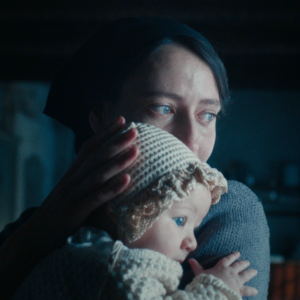
Martina Scrinzi as Lucia Graziadei in ‘Vermiglio’ (2024).
Muted tones, silent scenes and the beautiful scenery of a remote Italian village combined with the tragedy of the Second World War.
Telling the story of a clash between rural traditions and the changes caused by the ending of the war, Vermiglio, written and directed by Maura Delpero, is a 2024 Italian movie that tells the story of a family living in the Italian mountains in 1944.
The story follows the Graziadei family whose quiet life in a remote mountain village is suddenly interrupted by the arrival of Pietro Riso, a Sicilian soldier seeking refuge. He captures the attention of the eldest daughter, Lucia, which sparks emotional and moral conflict within the household. The film feels peaceful yet heavy with silence. Its tone is melancholic, showing both the beauty and stillness of mountain life while touching on themes of love, patriarchy and the quiet wounds that war leaves even in places untouched by the battle.
The Second World War, a globally familiar historical event, is told by Delbert from a whole new perspective – instead of focusing on political arguments and battlefields, she instead turns our attention to a small, secluded village in the breathtaking mountains of Italy.
The director shows the war quietly, by representing the change in traditions and the slow but steady transformation of typical, traditional values such as the patriarchal order in society. From a historical standpoint, it is obvious that Second World War included a great rise in the feminist movement – from millions of women entering the workforce for the first time, to world-famous role models for women such as Rosie the Riveter.
These values, which began growing during this period, are clearly depicted in Vermiglio, when Lucia rebels against her father. Delbert represents rebellion as quiet, but extremely significant – the women in the movie begin resisting the quiet suffocation they face, living in a patriarchal community.

One of the main topics is the conflict between Pietro and the father of the family. Even though, at first glance, it is caused by Pietro being a refugee and a new, unfamiliar addition to the village, the conflict is actually much deeper and rooted in both the history and culture of Italy during the war.
In 1944, Italy was not unified, but instead divided into north and south, one under the control of the Nazis, the other liberated by the Allies. The citizens of Vermiglio, which is located in the northern part, are hesitant towards a stranger from the south, especially as he is a soldier – the fear of soldiers is also deeply rooted in the culture. However, it is also important to focus on the character of Pietro himself and how he was affected by the war.
Many scenes, such as that of him standing outside and staring at the mountains in silence, depict how deeply he was changed by his experiences. His trembling hands on arrival, light sleeping and only rare moments of happiness represent the fear, exhaustion and displacement he feels, caused by the ongoing war. Deplero manages to tell a story already told a thousand times in an entirely different and striking way by using themes of feminism, rebellion, conflict and war trauma.
Harbingers’ Weekly Brief
Subscribe to the Harbingers’ Weekly Brief, a newsletter written by the editorial board of Harbingers’ Magazine, the world’s youngest newsroom, delivered to your inbox every Monday morning.
![slide image]()
![slide image]()
![slide image]()
![author_bio]()
![author_bio]()
![author_bio]()


The director constructs the visual world by using multiple techniques. First, she sets the tone of the movie by focusing on a muted colour palette, which creates a sense of melancholy, quietude and sadness.
Additionally, she pairs it with broad, calm landscape shots that highlight the stillness of the village and its isolation. The monumental landscapes contrast with the small, private conflicts inside the household. The camera usually stays still or moves at a slow pace. The shots are wide; however, close-ups appear in intense scenes, which intensifies the emotional impact, pulling the viewer from a distance into a slightly uncomfortable intimacy. In addition to visuals, music also plays a pivotal role within the film’s emotional structure.


The piano is calm in quiet daily scenes, but becomes heavy in dramatic moments, deepening the mood already created by the visuals and highlighting the dramatic tension. Ultimately, the cinematography and music work together to immerse the viewer in a world shaped by beauty, silence and underlying conflict.
Vermiglio is a truly striking film that combines themes such as family conflict, change, war and feminism. The story of a traditional family living in the Italian mountains is captivating and encourages us to watch and experience everything they go through together with them. The time setting is extremely important to the plot – by quietly introducing topics of war and conflict, we constantly feel a sense of fear or discomfort, contradicted by the warm setting of the small village.


Edited by:

© 2026 The Oxford School for the Future