Harbingers’ Magazine is a weekly online current affairs magazine written and edited by teenagers worldwide.
harbinger | noun
har·bin·ger | \ˈhär-bən-jər\
1. one that initiates a major change: a person or thing that originates or helps open up a new activity, method, or technology; pioneer.
2. something that foreshadows a future event : something that gives an anticipatory sign of what is to come.
We and our partners may store and access personal data such as cookies, device identifiers or other similar technologies on your device and process such data to personalise content and ads, provide social media features and analyse our traffic.
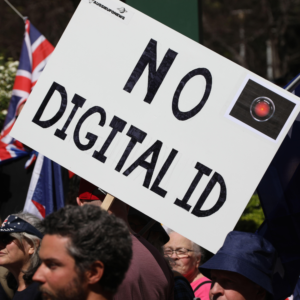
Digital ID is linked to Australia’s under-16 social media ban as an optional age verification tool.
Picture by:
Australia has taken an unprecedented step in the global debate over children’s online safety, forcing its youngest citizens to log off social media and urging them to “go outside” until they reach the age of 16.
Since 10 December 2025, a new law has bannedunder-16s from creating accounts on ten major platforms, namely Facebook, Instagram, Kick, Reddit, Snapchat, Threads, TikTok, Twitch, X (formerly Twitter) and YouTube.
Platforms have to deactivate accounts for users under 16 and also prevent under-16s from creating new accounts. Children themselves will not be penalised for using existing accounts, but companies that let under-age users sign in risk fines of up to AUD 50m ($35m).
The government says the law is designed to protect children from online harm, including cyberbullying, age-inappropriate content and online predators. Officials argue that the risks of social media now outweigh its benefits for young users. Critics, however, see the ban as a familiar policy problem: good intentions paired with questionable outcomes.
A central concern is how the ban will be enforced. Platforms are expected to verify users’ ages either through facial scanning technology or by requesting official ID such as passports or driver’s licences. This raises immediate privacy concerns.
Even some of the world’s most secure apps and institutions have suffered data breaches in recent years, exposing millions of users’ personal information.
Expecting children, or their parents, to trust social media companies with sensitive identity data feels like trading one risk for another.
Supporters of the ban argue that it may help reverse declining face-to-face social interaction among children. There is some truth to this. Young people today spend less time socialising in person, and a forced break from screens may encourage offline connections.
However, this view overlooks how social media also functions as a social lifeline. For young people with distant friends, long-distance family ties or limited opportunities to socialise in their immediate surroundings, it can be especially important. For many teenagers, these platforms are not distractions but tools for maintaining relationships.
There is also the question of whether the ban will work in practice. Teenagers are technologically savvy and well versed in finding loopholes. Many already bypassed age restrictions by lying about their age when signing up, often years before the ban was announced.
Harbingers’ Weekly Brief
Subscribe to the Harbingers’ Weekly Brief, a newsletter written by the editorial board of Harbingers’ Magazine, the world’s youngest newsroom, delivered to your inbox every Monday morning.
See you on Monday!
Ooops - please try again.
As a result, enforcement has been inconsistent: some users report losing access to certain platforms but no other apps, while many under-16s are continuing to use social media uninterrupted. This could lead to young people moving into less regulated or harder-to-monitor online spaces, undermining the very protections the law aims to provide.
That said, the ban does address real and serious harms. Features such as live location tracking on apps like Snapchat and the risk of contact with online predators have long worried parents and educators.
Cyberbullying, in particular, has become a significant issue among Australian youth. Statistics show that more than 50% of children have experienced it at some point, and it’s more common among teens than younger kids. School presentations and awareness campaigns have proven to be ineffective in reducing bullying.
From this perspective, the government’s intervention reflects frustration with softer approaches that have failed to curb the problem.
Still, an outright ban may not be the most balanced solution. A change in the age limit, such as 13 or 14, could better reflect teenagers’ growing capacity for independent decision-making and not confiscate their choice as that is the point when children have to grow up and learn to make decisions on their own.
Others argue that social media use should remain a matter of parental responsibility, not government control. There is also the economic side: some young people use these platforms as sources of income, networking or creative expression, a reality the law does not fully address.
Ultimately, Australia’s under-16 social media ban is both bold and experimental. As the first country to take such sweeping action, it has sparked a necessary conversation about children’s safety, privacy and autonomy online.
Whether the law becomes a global model or a cautionary tale will depend on how it evolves, and whether policymakers are willing to adjust it in response to its real-world consequences.
Born in 2009 in Saint-Petersburg, the cultural capital of Russia, Anastasia spent a year as a student in Sri Lanka. Then, since December 2023, she has lived in Sydney, Australia. She is part of Harbingers’ Magazine’sSri Lankan Newsroom.
In her free time, Anastasia enjoys reading and playing musical instruments. She likes to participate in musicals and is fond of travelling.
Anastasia can fluently speak English and Russian while trying to learn Spanish.
🌍 Join the World's Youngest Newsroom—Create a Free Account
Sign up to save your favourite articles, get personalised recommendations, and stay informed about stories that Gen Z worldwide actually care about. Plus, subscribe to our newsletter for the latest stories delivered straight to your inbox. 📲
We use cookies to ensure that we give you the best experience on our website. If you continue to use this site we will assume that you are happy with it.