


17-year-old Jasmin explores what independence means for women in Egypt
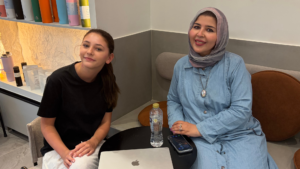
I travelled from Poland to Cairo with a question: how much do gender and social expectations shape women’s economic opportunities and independence?
It did not take long for that question to become visible. At the hotel where I was staying, most of the employees I encountered were men, and women seemed largely absent. As I moved around the Egyptian capital, I became increasingly curious about where women were present in the economy, where they were missing and why.
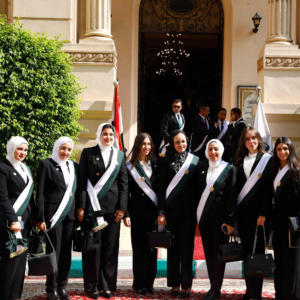
During my reporting trip, I interviewed women working in a variety of fields from law and diplomacy to academia and religious institutions, some in senior positions. Their experiences challenged any stereotypes about Egyptian women and work.
Harbingers’ Weekly Brief
Subscribe to the Harbingers’ Weekly Brief, a newsletter written by the editorial board of Harbingers’ Magazine, the world’s youngest newsroom, delivered to your inbox every Monday morning.
![slide image]()
![author_bio]()


How could these two realities coexist? How is it possible that women are reaching such high positions while they continue to remain so underrepresented in the country’s workforce?
According to the World Bank Gender Data Portal, in 2025 women’s participation in the labour force in Egypt was 18.5%, compared with 70.5% for men. Although women’s participation remains low, it has increased by 13.5% since 1975.
In May, the OECD (Organisation for Economic Co-operation and Development) published a report entitled Women’s Economic Empowerment in Egypt. It found that women hold around 22% of senior or middle management positions, and median wages for women in the private sector are 77% of men’s.
The numbers reveal a significant gender gap, but statistics alone cannot explain why it exists or what economic independence actually means for women in Egypt. The women I interviewed described both the rise of women’s financial independence in Egypt and the barriers that remain.
What shapes women’s choices?
Dr Reham Abdullah Salamah, general director at the Al-Azhar Observatory for Combating Extremism and a professor at Al-Azhar University’s Urdu department, told me how she has encountered persistent misconceptions about women’s professional abilities.
She gave the example of people being reluctant to see a female doctor because they are doubtful of her capabilities. Women can also be pushed towards certain careers because they are considered more “socially acceptable,” such as nursing, teaching or childcare.
“There are still social expectations and stereotypes that can make women’s professional journeys more complicated,” she said. “Women may sometimes feel that they have to prove their competence repeatedly or work harder to be taken seriously, particularly in leadership positions.”
At the same time, Dr Salamah highlighted the progress Egyptian women have made when it comes to financial independence, education and professional life.
At the Urdu language department, for example, her entire team is made up of women. They were not selected because they were women, she explained, but because they were the strongest candidates.
For her, ambition is something young women should not be afraid of, even when they encounter rejection or failure.
“My most important advice would be: do not make yourself smaller to fit into someone else’s expectations of what a woman should be,” Dr Salamah said.
She added: “Invest in your education. Develop your skills. Learn languages. Read widely. Understand the world around you. Build your confidence, but remain humble enough to keep learning.”
When choice is constrained
For Mariam Adel, a human rights analyst with a master’s degree in international law, education and hard work have been central to building an independent life. She believes young women need to invest in their studies, travel when they have the opportunity and gain inspiration from others.
Financial independence, she argues, becomes particularly important when a woman’s circumstances unexpectedly change. In Egypt, many married women who are housewives do not have their own source of income and depend financially on their husbands.
If a marriage ends, that dependence can become a serious problem. A woman who has spent ten years as a housewife, Adel pointed out, may suddenly find herself trying to compete for jobs without a decade of professional experience.
Her own career demonstrates that gender is not the only factor shaping economic opportunity. As a woman with visual disability, Adel said she repeatedly had to prove her abilities.
When she chose to study political science, she was confronted with questions such as: “Why are you choosing political science?” and “No one has done this before with your disability.”
View this post on Instagram
Adel said that barriers also differ according to education, financial circumstances and family attitudes. Some families continue to prioritise marriage over women’s education or believe that particular professional paths are unsuitable for women.
But identifying these barriers raises another question: what does independence actually mean? Dr Hania Sholkamy, an anthropologist and associate research professor at the American University in Cairo, encouraged me to look beyond employment and income when thinking about women’s autonomy.
She argues that sexuality, bodily safety, health, intimate relationships and the right to pleasure also influence women’s autonomy. “This is the black box that we don’t want to address,” she said.
Her argument complicates the idea that simply getting more women into jobs is enough. Economic choices do not happen separately from relationships, family life and personal wellbeing.
Nor does Dr Sholkamy believe that every woman who prioritises her family should automatically be seen as a victim of gender inequality. In her research, she has encountered women who take pride in their ability to adapt and provide for their families, even under difficult circumstances.
The question, then, is not only whether a woman works, but how much freedom she has to decide what kind of life she wants.
Women in positions of power
The same tension between professional ambition and family responsibilities appeared in my conversation with Dr Nourane Helmy, an Egyptian diplomat.
She recalled being the only woman working at the Egyptian embassy in Warsaw, bringing a “woman’s perspective” to a male-dominated environment. Her career also required her to balance the demands of diplomacy with motherhood and family life.

Dr Helmy’s experience suggests that reaching a position of influence does not necessarily make questions of family and gender disappear. At the same time, she emphasised that independence did not mean doing everything alone: family support had been essential to her career.
Dr Sholkamy’s experience offers another perspective. She told me that she never felt being a woman had significantly disadvantaged her in academia, partly because academic and social research were already relatively familiar professional spaces for women. What mattered more to her was autonomy and flexibility, including having time for her family.
By the end of my trip, I found myself thinking differently about what I noticed when I arrived. The contradiction that I initially saw between women missing from some workplaces and the successful women I interviewed are not really a contradiction. Both are part of contemporary Egypt.
Gender and social expectations still shape the opportunities available for women and the choices they make within them. But class, education, family circumstances, disability and the wider economy shape those choices too. Crucially, the women I interviewed did not all define independence and success in the same way.
Perhaps that was the most important thing I learned in Cairo. The question is not simply whether Egyptian women are financially independent, it is whether they have enough opportunities, support and freedom to decide for themselves what independence and success should look like.

© 2026 The Oxford School for the Future