



logo

Harbingers’ Magazine is a weekly online current affairs magazine written and edited by teenagers worldwide.

harbinger | noun

har·​bin·​ger | \ˈhär-bən-jər\

1. one that initiates a major change: a person or thing that originates or helps open up a new activity, method, or technology; pioneer.

2. something that foreshadows a future event : something that gives an anticipatory sign of what is to come.

cookie_image

We and our partners may store and access personal data such as cookies, device identifiers or other similar technologies on your device and process such data to personalise content and ads, provide social media features and analyse our traffic.

25 September 2026

Bible study as a mandatory subject? No thanks

author_bio
Ava Miltenberg in New Jersey, United States

Article link copied.

slide image

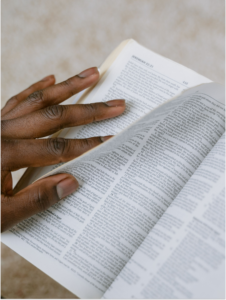
In June the Texas Board of Education voted to make Bible stories mandatory in public schools

Picture by Tima Miroshnichenko | Pexels

Before I learned cursive, I learned the Hebrew alphabet.

Growing up in a Jewish day school, religious education wasn’t unusual – it was very much expected. We learned Torah stories while playing with the same building blocks that every pre-schooler plays with. We celebrated Jewish holidays as naturally as we celebrated summer vacation. My parents chose that education for me, just as every other family there had chosen it for their children.

Today, my high school looks very different. My classmates are Jewish, Catholic, Muslim, Hindu, Christian, atheist and everything in between. That diversity has made me appreciate something I rarely questioned as a young child. Even in a private school setting, students come from many different backgrounds, which means no single belief system can define the experience for everyone.

That question is now at the centre of a growing debate in Texas.

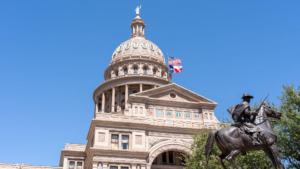
In June, the Texas State Board of Education voted to make stories and passages from the Bible part of the state’s kindergarten-through-12th-grade (K-12) English and literature curriculum. This will affect more than five million public school students, starting in 2030.

The decision establishes a required reading list for every grade level in Texas’s public schools. Alongside canonical works of American literature, students will read Bible stories such as David and Goliath, Daniel and the lions’ den, passages from Genesis, and selections from Psalms.

View this post on Instagram

A post shared by Harbingers’ Magazine (@hrb.mag)

Supporters insist these texts are being taught for their literary and historical significance, arguing that students cannot fully understand Western civilisation or the founding of the United States without a working knowledge of the Bible.

Critics see something else entirely: a state government stepping beyond teaching about religion and into enforcing it.

As someone who grew up receiving a religious education, I don’t believe the problem is that students are reading the Bible.

Religious texts have undeniable historical, literary and cultural value, and they absolutely belong in classrooms when they are taught academically rather than devotionally. My concern is constitutionality.

The First Amendment protects both the free exercise of religion and prohibits the government from establishing one. Those two principles work hand-in-hand to ensure that students of every faith, and of no faith, can enter a public school knowing the state is not endorsing one belief system over another.

The Supreme Court has long recognised that teaching about religion is constitutional when it serves a genuine educational purpose. Requiring specific biblical passages as part of a state-mandated curriculum, however, raises a different question of the difference between teaching and promoting. That distinction will likely become the focus of the legal challenges many constitutional scholars expect to follow from the Texas decision.

A broader debate over religion

The decision also comes amid a series of educational debates in Texas that have increasingly centred on religion.

Earlier this year, Muslim parents and several Islamic private schools filed federal lawsuits against the state after they were excluded from Texas’s new school voucher programme. The plaintiffs argued that schools meeting the programme’s academic requirements were denied participation because of their religious identity, raising concerns about whether the state is applying its policies equally across faiths.

At the same time, the Texas Education Agency concluded its investigation into allegations of antisemitism in a school district in the city of Plano. Investigators documented multiple incidents – including antisemetic bullying, curriculum concerns and failures to follow district procedures – but ultimately found no systemic violation of civil rights law.

For many Jewish families, the finding raised difficult questions about what constitutes meaningful protection for religious minorities in public schools.

slide image
  • The decision comes amid a wider debate over how Texas applies education policies to different religions

  • Together, these concerns illustrate a broader shift in how Texas is navigating the relationship between religion and public education. Whether intentionally or not, the state increasingly finds itself deciding which religious influences belong in schools and how different faith communities are treated under its policies.

    The Texas Board insists that these changes are about education, not religion. But making those texts required for every public school student is what transforms this from a curriculum debate into a constitutional one.

    There is a meaningful difference between teaching students about the influence of religion and having the state determine which religious texts every child must study. In a public school system that serves millions of students from countless religious backgrounds, that distinction is crucial.

    The courts will ultimately decide whether Texas has stayed within the bounds of the First Amendment, but the conversation shouldn’t end there. Even if the new curriculum is upheld, it forces us to ask what role religion should play in the public education system designed to serve everyone, not just Christianity.

    Written by:

    author_bio

    Ava Miltenberg

    News Editor 2026

    New Jersey, United States

    I still have a highlighter-streaked notebook from a rainy afternoon at my middle school, the pages warped from my backpack getting soaked, the ink a little smeared, everything glowing yellow anyway. I remember sitting in a crowded classroom, bell blaring, while my social studies teacher explained what your First Amendment rights actually meant. I didn’t say much, but I wrote everything down.

    Long before that, I used to sit on the stairs at home and eavesdrop on my dad’s late-night phone calls from his office. I didn’t understand the legal jargon, but I picked up the cadence, the careful questions, the long pauses, and the way words could shift any situation. It was my quiet introduction to how law works in real life.

    Last summer, I took criminal justice classes at USC, trading my high school classroom for a packed lecture hall where professors challenge easy narratives about punishment, power, and fairness. The experience made me more skeptical, more curious, and less willing to accept simple explanations.

    When I’m not thinking about law or history, I’m usually reading or writing poetry, or scribbling lines in the margins of whatever it is that I’m studying. I like precision, in a poem, in a news story, or in a legal argument from Suits.

    I write to slow complicated moments down, look at them closely, and understand what they reveal about people and power.

    Edited by:

    author_bio

    Arnav Maheshwari

    Editor-in-Chief 2026

    Georgia, United States

    opinion

    🌍 Join the World's Youngest Newsroom—Create a Free Account

    Sign up to save your favourite articles, get personalised recommendations, and stay informed about stories that Gen Z worldwide actually care about. Plus, subscribe to our newsletter for the latest stories delivered straight to your inbox. 📲

    Login/Register