



logo

Harbingers’ Magazine is a weekly online current affairs magazine written and edited by teenagers worldwide.

harbinger | noun

har·​bin·​ger | \ˈhär-bən-jər\

1. one that initiates a major change: a person or thing that originates or helps open up a new activity, method, or technology; pioneer.

2. something that foreshadows a future event : something that gives an anticipatory sign of what is to come.

cookie_image

We and our partners may store and access personal data such as cookies, device identifiers or other similar technologies on your device and process such data to personalise content and ads, provide social media features and analyse our traffic.

14 August 2026

Do Gen Z want to have kids?

author_bio
​​Sofia Vorobei in Vergel, Spain

Article link copied.

slide image

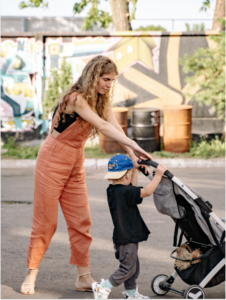
For Gen Z, having children is no longer seen as the only path in life.

Picture by: Yan Krukau | Pexels

For previous generations, having children was often seen as the natural next step in life. Finish school, find a stable job, get married and start a family.

Today, however, that path seems a lot less straightforward. Among Gen Z, conversations about delaying parenthood – or choosing not to have children at all – have become really common. A lot of my friends say they don’t want to have kids at all or only around their early forties.

One of the biggest differences between Gen Z and earlier generations is that having children no longer feels like an expectation. Society has become much more accepting of different lifestyles, and people are less likely to be judged for choosing to live child-free.

Women, in particular, now have better opportunities to pursue education and careers without the assumption that motherhood must necessarily follow.

Personally, I do want to have kids and start a family. However, I feel like I’m only going to be ready to do so at a point in my life when I am financially stable and satisfied with my career. And that goes for many other young people.

Reproductive health and contraception are discussed far more openly than they once were. Better sex education and easier access to birth control, particularly in Western countries, allow young people to make more deliberate decisions about whether and when to become parents.

 

View this post on Instagram


A post shared by Harbingers’ Magazine (@hrb.mag)

It also reduces the number of unwanted pregnancies. According to the Centers for Disease Control and Prevention (CDC), America’s federal government health agency, the unintended pregnancy rate in the US fell by 15% between 2010 and 2019.

And that’s actually a positive development. We all deserve to know how our bodies work and to be able to choose when and if to have children. Unwanted pregnancies can be a big challenge and treating reproductive health topics as ‘taboo’ does no good to anybody.

Of course, there are also some practical concerns that play a major role in whether to have children. The cost of raising a child has become increasingly expensive. Housing prices are rising, rent consumes a large share of people’s income, and stable employment can be really difficult to secure.

For us, a generation that’s already constantly worrying about financial independence, the idea of supporting a family can seem pretty overwhelming.

It’s not surprising that many people feel they should first achieve financial stability before even considering parenthood – if they ever feel they will reach that point at all.

Gen Z has also grown up with a different understanding of adulthood. There is less pressure to settle down by a certain age, and young people put greater emphasis on education, career development and personal growth before marriage or parenthood. Many young people want the freedom to move between cities, change careers or simply focus on themselves without the long-term commitment that comes with raising kids.

However, it would be unfair to say that Gen Z no longer wants families. Many young people still dream of becoming parents. I have some friends, both male and female – even though they’re in a minority – who want kids and even a lot of them.

What has changed is the amount of thought that goes into that decision. Rather than simply following social expectations, many people have begun to ask themselves whether they are emotionally, financially and mentally prepared to take on this responsibility. Parenthood is now viewed as a choice rather than something everyone is expected to reach.

Social media has also influenced these attitudes. Although it often shows idealised family life, it has also given a platform for young people to share the challenges of parenting. Seeing this can be discouraging, but it also creates more realistic expectations about what parenthood involves.

Ultimately, Gen Z is approaching parenthood with more thought than before. The question is no longer whether everyone should have children, but whether having children is the right choice for each individual.

Written by:

author_bio

​​Sofia Vorobei

Culture Section Editor 2026

Vergel, Spain

I’m Sofia Vorobei, with a passion for quality cinema. It all started when I was around eight. While watching one of those Nickelodeon sitcoms, I couldn’t stop thinking about how fun it must be for the actors and how I wished I could be part of something like that. Ever since then, I’ve wanted my life to have something to do with it. I’ve wanted to act, create, write, direct…

In middle school, however, my perception of that changed. I wasn’t eight anymore, and I understood that this path is an uphill battle. It’s demanding, messy, and a bit like a lottery: you either get very lucky and win, or you don’t.

Still, that realisation didn’t push me away from my dream; it was simply a reality check. I began to understand that passion alone isn’t enough — it takes hard work and making the most of every resource available, while continuing to improve without rushing the process. The industry may be unpredictable, but I believe that if you truly put everything into something, it has a way of standing out.

I was born in 2009 in Kyiv, Ukraine, and moved to Vergel, Spain, near Valencia, in 2020.

I joined Harbingers’ Magazine in the summer of 2023 and have since written about the intersections of culture, creativity and society. My work with the magazine led to my appointment as Culture Section Editor in March 2025. 

I also serve as Afghanistan Newsroom Editor, roles I continue to hold in 2026, helping shape the magazine’s cultural coverage and coordinate reporting within the newsroom.

I speak Ukrainian, Spanish, English and Russian.

Edited by:

author_bio

Arnav Maheshwari

Editor-in-Chief 2026

Georgia, United States

opinion

🌍 Join the World's Youngest Newsroom—Create a Free Account

Sign up to save your favourite articles, get personalised recommendations, and stay informed about stories that Gen Z worldwide actually care about. Plus, subscribe to our newsletter for the latest stories delivered straight to your inbox. 📲

Login/Register