



17 year-old Klara reviews the last episode of Netflix’s saga

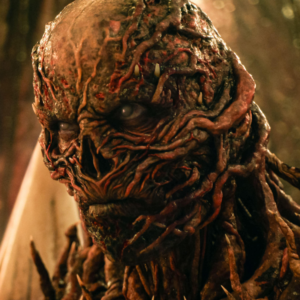
Jamie Campbell Bower as Henry Kreel / Vecna in Stranger Things
3 February 2026
Great visuals, some amazing writing, but felt calculated. Stranger Things finale review


Spoiler Alert: The following article discusses the plot of Stranger Things. We suggest reading it only after you have watched the show.
While watching the final episode of Stranger Things, I was very emotional. When the credits rolled, I was heartbroken — mostly because of Henry. I really hoped there would be a way to save him.
The finale certainly lived up to its reputation as a spectacle and an emotional rollercoaster. Fast action, spectacular visuals, and fantastic acting — especially from Jamie Campbell Bower, who managed to finally explain the nature of Henry Kreel, aka Vecna, aka 001. At times, the writing was truly excellent; examples include Vecna’s attack on Hopper’s imagination or Dustin’s valedictorian speech.
Yet, once the story ended, I discovered I wasn’t really touched. The dust settled and nothing substantial seemed to have really happened. It seemed like the Duffer Brothers wrote a happy ending so everyone would be happy. This felt calculated, like there were focus groups to decide how to end the 10-year show in the least divisive way.

It’s true that Kali died, but she was a third-tier character, and the only major death was that of the villain. It was touching, because Henry Kreel was a masterfully written evil character, but that the series ended with his death is unlikely to have surprised anyone. Actually, saving him would be a massive surprise.
I can even recall when I stopped believing that anything really bad could happen. It was after Steve Harrington had almost fallen into the abyss, only to be miraculously—and not really believably—saved by one of his friends. Since then, I knew that all the good guys would come out at the other end unscathed. After Steve’s rescue, when Nancy was chased by a Mind Flayer into a narrow canyon, the scene was as visually striking as it was emotion-free. My reaction was: “Wow, that’s just well made!”
The use of deus ex machina made it all too simple. After ten years of waiting, the ending was too fast (the entire final battle took less time than one important conversation the team had earlier) and too simplistic.
It was like the Duffer Brothers told me: There is no price to be paid for courage. Going into a battle against evil has no actual consequences. No one will die, no one will lose a limb, no hope will be lost and no future broken. Everyone will just get their happily ever after. Sorry, but I don’t buy it.
In effect, the final episode of the entire show was a lesser piece of writing than the final episodes of both Season 4 and Season 3. In my opinion, the final episode of Season 3 — The Battle of Starcourt — is by far the best of all.
Harbingers’ Weekly Brief
Subscribe to the Harbingers’ Weekly Brief, a newsletter written by the editorial board of Harbingers’ Magazine, the world’s youngest newsroom, delivered to your inbox every Monday morning.
![author_bio]()


Ultimately, the hype around the final episode was much greater than the episode itself. Fans showed how much they loved Stranger Things. Not only did DJO’s song topple Taylor Swift from the top of the charts and bring back songs from the past (especially the remix of Kate Bush’s Running Up That Hill), but, according to Reddit, someone made an $11,000 bet that Eleven wouldn’t die.
It was also the fans who best expressed their disappointment with the final episode. Immediately after the end, large swathes of the internet began discussing a conspiracy theory known as “Conformity Gate,” according to which Netflix has a secret, additional finale in store.
At one stage, fans storming the website in search of the “true” finale even managed to crash the streaming service — a vivid testimony of how much they hoped that what we saw on January 1 was not the end of Stranger Things.

© 2026 The Oxford School for the Future