Harbingers’ Magazine is a weekly online current affairs magazine written and edited by teenagers worldwide.
harbinger | noun
har·bin·ger | \ˈhär-bən-jər\
1. one that initiates a major change: a person or thing that originates or helps open up a new activity, method, or technology; pioneer.
2. something that foreshadows a future event : something that gives an anticipatory sign of what is to come.
We and our partners may store and access personal data such as cookies, device identifiers or other similar technologies on your device and process such data to personalise content and ads, provide social media features and analyse our traffic.
The bill is set to make the state’s 2030 emissions targets non-binding, drawing criticismfrom climate activists.
Advocates of the bill argue that the focus is on easing rising electricity and heating costs while limiting the state’s legal risk if climate targets are missed. However, critics say that this approach undermines Massachusetts’ long-standing climate commitments, including enacting net-zero emissionslegislation passed in 2021.
The new bill also caps funding for Mass Save, the state’s energy-efficiency programme, which experts say currently lowers household energy bills while advancing decarbonisation goals. Environmental advocates warn that restricting the programme could slow emissions reductions and increase long-term costs for residents.
The state of Massachusetts has long positioned itself as a national leader in climate policy, adopting legally binding emissions targets and investing heavily in energy-efficiency and clean-energy programmes to meet those goals.
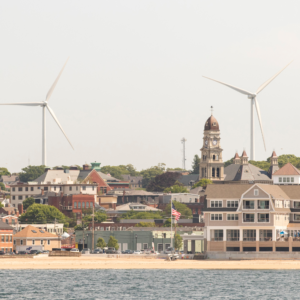
The proposal comes after US president Donald Trump imposed funding cuts that directly affected Massachusetts’s clean‑energy transition, including halting offshore wind permits and cutting funds for solar and electric‑vehicle projects. The measures were introduced on Trump’s first day in office, in January, as residents’ worried about energy costs during winter.
Harbingers’ Weekly Brief
Subscribe to the Harbingers’ Weekly Brief, a newsletter written by the editorial board of Harbingers’ Magazine, the world’s youngest newsroom, delivered to your inbox every Monday morning.
See you on Monday!
Ooops - please try again.
This comes as part of a broader Republican push for an economy dependent on oil and gas. Hence, climate scientists fear that the pressure to create a non-binding clause is pushing for short-term cost relief and legal flexibility over paying attention to the actual climate.
Young voters react
Harbingers’ Magazine interviewed several high school students in Massachusetts for their views on the issue.
Izzie Johnston, 17, disagrees with Cusack’s bill. “We are already hugely backsliding as a nation on the climate crisis. One of the few states that has historically been a strong advocate of climate change management is choosing to prioritise short-term, minimal economic growth over a desperately needed concrete energy goal,” she says.
Johnston says that “weakening those commitments risks reversing progress made over the past decade”. She also thinks that limiting Mass Save is “deeply concerning”, noting that the programme actively saves residents money while reducing emissions.
She also supports increased investment in nuclear energy, arguing that its potential for large-scale clean power outweighs concerns often exaggerated in public discourse.
Gina Zhao, 17, agrees that the bill “undermines Massachusetts’ continued efforts at environmental protection”. She says “it’s time to show our determination, to show that we are moving towards the right direction, to show that the world leaders know full well the scale of emergency we are facing.”
Zhao’s comments emphasised the urgency and global climate leadership implications of the bill rather than framing it as a purely local economic issue.
Moran Liu, 18, criticises the lack of compromise between previous climate efforts and economic concerns: “We should be finding solutions that protect both people’s wallets and the environment, definitely not forcing a choice between the two.”
Liu demands that economic relief and environmental protection are addressed together, rejecting what she described as a false trade-off between affordability and climate responsibility.
For Gen Z, planning around the climate crisis is not optional. Liu also points out that “making climate goals ‘non-binding’ also sends the message that environmental commitments are optional, even as climate change becomes more urgent.”
As the bill moves through the legislature in 2026, residents and climate activists warn that its effects could shape the state’s climate trajectory through 2050, raising questions about who will bear responsibility for weakening the nation’s emissions standards.
Born in 2007 in Shanghai, Katie studies in Massachusetts, United States. She is interested in math and art and plans to study data science and economics. For Harbingers’ Magazine, she writes about science, human rights, and culture.
In her free time, Katie enjoys playing squash, reading, and art.
🌍 Join the World's Youngest Newsroom—Create a Free Account
Sign up to save your favourite articles, get personalised recommendations, and stay informed about stories that Gen Z worldwide actually care about. Plus, subscribe to our newsletter for the latest stories delivered straight to your inbox. 📲
We use cookies to ensure that we give you the best experience on our website. If you continue to use this site we will assume that you are happy with it.