Harbingers’ Magazine is a weekly online current affairs magazine written and edited by teenagers worldwide.
harbinger | noun
har·bin·ger | \ˈhär-bən-jər\
1. one that initiates a major change: a person or thing that originates or helps open up a new activity, method, or technology; pioneer.
2. something that foreshadows a future event : something that gives an anticipatory sign of what is to come.
We and our partners may store and access personal data such as cookies, device identifiers or other similar technologies on your device and process such data to personalise content and ads, provide social media features and analyse our traffic.
On 22 September, 15 of the 24 people accused of being involved in the terrorist bombings in Sri Lanka on Easter Sunday 2019 were found guiltyand sentenced to hundreds of years in prison.
It was the first conviction of any perpetrators directly involved in the attacks.
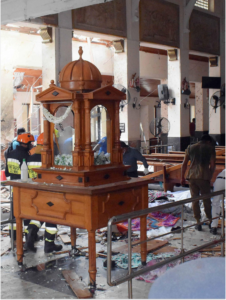
On 21 April 2019, Easter Sunday, a series of six suicide bombings targeted three prominent Catholic churches and three luxury hotels. The attacks were almost simultaneous, occurring in the capital, Colombo, and the coastal cities of Negombo and Batticaloa.
Some 267 people were killed, including the nine suicide bombers and 45 foreign nationals. More than 600 were injured. Several hours later, two more bombs detonated, at a housing complex and a motel. The latter killed a suicide bomber who had returned to the motel after seemingly failing to detonate the bomb at another luxury hotel.
The bombings were among the worst in Sri Lanka’s history and shocked the nation. The country went into lockdown under emergency regulations amid fears of further attacks and inter-ethnic unrest.
The attacks were carried out by a local group that had allegedly pledged allegiance to Islamic State (also known as ISIS or Daesh) – although this was not proven in court.
When the case was filed in 2021, 23,270 charges were filed against 25 individuals accused of planning and coordinating the attack. These charges included murder, conspiracy to commit terrorism, and possessing firearms and explosives under the Prevention of Terrorism Act.
Fifteen people (all from Sri Lanka’s minority Muslim community) were each given a sentence ranging from 200 to 260 years in prison. Charges against the other nine defendants were not proven and they were released. The 25th defendant died in custody while the case was ongoing.
Government officials charged with negligence
While the trial’s verdict marked a significant point in the fight for justice for the victims of the Easter terrorist attacks, the attempt to find people accountable for the bombings has been multifaceted.
For example, many state leaders and senior officials have been charged with negligence for ignoring international and local intelligence warning them of a potential attack of this kind.
In 2023, Sri Lanka’s Supreme Court ruled that former president Maithripala Sirisena and four other officials were guiltyof “failing to prevent” the bombings, since they had received intelligence prior to the attack.
The former president was ordered to personally pay the victims and their families 100 million Sri Lankan rupees (about $300,000) in compensation, while the other officials were ordered to pay a total of 210 million Sri Lankan rupees (about $635,000).
In addition, former intelligence chief Suresh Salley was arrested in February this year for allegedly conspiring and aiding the attacks.
In 2023, a whistleblower claimed on UK broadcaster Channel 4 that Salley was involved with the bombers, and that he did not prevent the attacks in order to aid the presidential election of Gotabaya Rajapaksa.
Rajapaksa, whose family had dominated Sri Lankan politics for decades, went on to win the election a few months later, in November 2019, after promising to crack down on violence. He was ousted in 2022 after protests against Sri Lanka’s economic problems.
Harbingers’ Weekly Brief
Subscribe to the Harbingers’ Weekly Brief, a newsletter written by the editorial board of Harbingers’ Magazine, the world’s youngest newsroom, delivered to your inbox every Monday morning.
See you on Monday!
Ooops - please try again.
In July this year, former police chief Pujith Jayasundara and defence ministry secretary Hemasiri Fernando were sentenced to death, after being found guilty of criminal negligence for the bombings. (There has been a moratorium on executions in Sri Lanka since 1976, so this really means life in prison.) Both had already been ordered to pay damages to survivors of the attacks.
Nationwide protests have been held annually on 21 April, the anniversary of the attacks, demanding justice for victims of the horrific bombings.
The Catholic Church in Sri Lanka is satisfied with the verdicts handed out to those convicted, according to Rev. Fr. Jude Krishantha Fernando, director of mass communications for the Archdiocese of Colombo.
However, he stressed that investigations should still continue regardless of the judgement in order to uncover the reason why the attacks were not prevented, and if more people were involved.
Hesandi Ravisinghe, born in 2009 in Galle, Sri Lanka, joined Harbingers’ Magazine as a contributor to the Sri Lankan Newsroom in January 2024. After completing the writing course, she became a regular writer, focusing on wildlife and science.
Her strong interest in nature and consistent work with the magazine led to her appointment as Science Section Editor in March 2025, a role she continues to hold in 2026. She also serves as Editor of the Nepali Newsroom.
Hesandi has a deep interest in art, nature and wildlife, particularly elephants, leopards and birds.
In her free time, she enjoys painting and travelling.
Hesandi speaks English and Sinhala and is currently learning Indonesian.
🌍 Join the World's Youngest Newsroom—Create a Free Account
Sign up to save your favourite articles, get personalised recommendations, and stay informed about stories that Gen Z worldwide actually care about. Plus, subscribe to our newsletter for the latest stories delivered straight to your inbox. 📲