


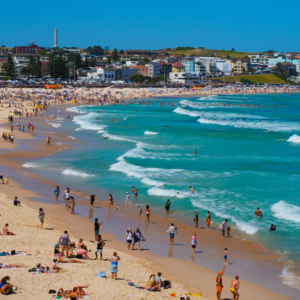
16-year-old Anastasia explains how UV radiation can cause skin cancer, and how to protect yourself
It’s summer in Australia, the best time of the year to enjoy outdoor activities. There’s so much to do: going to the beach, hiking, swimming, exploring the outback… but the danger we forget about is UV radiation.
Ultraviolet (UV) radiation is the leading cause of skin cancer, with more than 1.5 million recorded cases of skin cancer and 120,000 related deaths in 2020, according to the World Health Organization. It’s the most common form of cancer in the United States, with one in five Americans predicted to develop it by the age of 70.
Harbingers’ interviewed Sally Blane, chair of Cancer Council’s National Skin Cancer Committee about the subject. “Australia has the highest rates of skin cancer in the world, with two in three Australians expected to be diagnosed with skin cancer in their lifetime,” she says.
“Melanoma is the most common cancer in young Australians aged 18 to 39 and the third most diagnosed cancer in all Australians,” she adds.
UV radiation changes depending on the time of day, season and your location. It damages our skin’s DNA, leading to serious issues because UV damage is permanent and cumulative. The UV Index shows that the highest levels occur at high altitudes, near the equator and in areas with low ozone.
The highest recorded UV is in the Andes mountains and northern Chile. Equatorial Africa and Asia often reach extreme UV levels (12–13), as does Australia, which can top 14 in the north of the country.
Ms Blane says it is crucial to monitor the UV index and take protective measures whenever it reaches 3 or higher.
View this post on Instagram
What do Australian teenagers think?
Skin cancer can develop at any age, and while the risk increases as we get older, damage often begins much earlier. Childhood and adolescence are particularly important, as skin is more vulnerable.
Everyone needs to wear sunscreen, but people of all ages don’t, for whatever reason. Teenagers, who often like to tan, tend to be the most irresponsible ones.
“I believe we are natural creatures meant to endure the sun,” says 17-year-old Peach Callaghan, confidently.

Isaac Portelli, 16, explains his thought process: “When I’m outside long enough on a hot sunny day for me to get burnt, I wear sunscreen – but only during the summer. In winter, I don’t think about it.”
“I only put on sunscreen when it’s sunny and the UV is higher than 7, but if it’s cloudy then I don’t apply any,” says Erin McClenahan, 16. “However, I do wear a hat everyday.”
Some people think that wearing a hat is “an obligation that restricts free will”, and use sunscreen only on very hot days with a UV level above 7 – but not to school, only when they’re outside for a long time, such as hiking or at the beach.
“I suppose I should get over myself and wear a hat to add more protection when sitting outside for school breaks at UV peak. But teachers get fussy about you wearing a hat inside,” says Sami Bodey, 16.
She knows the risks, but still feels judged – most teenagers don’t wear hats – and chooses not to protect herself.
However, the reality is that UV radiation is invisible and, unlike heat or sunlight, can be harmful on any day, even cloudy ones. That is why it’s vital to apply at least some form of UV protection – whether long clothing, a hat or sunscreen – if UV levels are higher than 3.
Types of skin cancer
There are three main types of skin cancer. The most common ones in Australia are basal cell carcinoma (BCC) and squamous cell carcinoma (SCC), which account for two-thirds and one-third of skin cancers, respectively. These are non-melanoma types, also known as keratinocyte cancers, and are not usually life-threatening.
The most dangerous form of skin cancer is melanoma. It is the third most common skin cancer (though only 1-2% of cases) in Australia, with 18,200 people diagnosed with it in 2023. It tends to affect older people – the average age of diagnosis is 65 – but sunburn in childhood increases the risk of getting it later in life.
According to the Cancer Council’s Ms Blane: “At least 95% of all skin cancers in Australia are caused by overexposure to UV radiation from the sun, which means nearly all skin cancers can be prevented.”
Harbingers’ Weekly Brief
Subscribe to the Harbingers’ Weekly Brief, a newsletter written by the editorial board of Harbingers’ Magazine, the world’s youngest newsroom, delivered to your inbox every Monday morning.
![author_bio]()
![author_bio]()


Sally Blane emphasises the importance of of sun protection: “Never rely on just one [method], always use a combination.”
She recommends wearing clothing that covers your body, applying broad-spectrum, water-resistant, SPF50+ sunscreen, wearing a broad-brimmed hat and sunglasses, and seeking shade whenever you can. It’s also important to reapply sunscreen when required.
It is important to educate people as early as possible and make sun protection an everyday habit. “Remember, it’s never too late to make a difference,” encourages Ms Blane. “By starting now, you can significantly reduce your future risk of developing skin cancer.”
Edited by:

© 2026 The Oxford School for the Future