


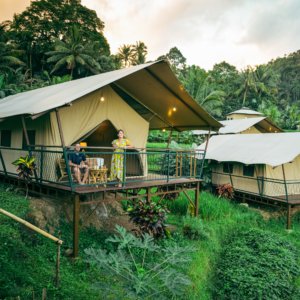
17-year-old Matthew interviews Discova Indonesia’s Ari Sintya Dewi on Bali’s tourism problems and potential solutions
Bali – the Hindu enclave within Muslim-majority Indonesia, often nicknamed the ‘Island of the Gods’ – is a world-class travel destination known for its well-preserved ancient culture, volcanic landscapes and sun-kissed beaches. It has long been a crowded hub for surfers, digital nomads and travellers seeking spiritual wellness, often to the dismay of its local inhabitants.
Tourism is a key economic contributor in Bali, generating billions of US dollars annually while accounting for roughly 60% of its regional GDP. Since the launch of a passenger ship route from Java in the 1920s, the money brought by tourists has transformed a once self-sufficient agricultural hinterland into the consumption-driven service economy it is today. Yet, the island’s embrace of visitors has not been without controversy.
In July, an expat-owned running club in Bali sparked intense backlash after its purported exclusion of Indonesian nationals, reigniting a debate about the long-term presence of foreign residents and businesses in certain parts of the island.

Ni Putu Ari Sintya Dewi Sintya a community development specialist at travel company Discova
The Balinese authorities have recently tightened restrictions on foreign investments in 18 business sectors, including food & beverage, small hotels, car rentals and fitness centres.
To further understand this complex situation, Harbingers’ spoke with Ni Putu Ari Sintya Dewi, who works as a community development specialist at Discova, a Southeast Asia-based travel company.
Sintya focuses primarily on rural areas across Indonesia, including Bali and Java, by facilitating the development of what she describes as “community-based tourism”, where local residents are actively involved in the development and management of tourist activities.
Gentrification – the process by which the relocation of wealthier individuals into previously low-income areas results in rising costs and the displacement of existing residents – has emerged as a significant problem for the Balinese population.
The cost of living is soaringin tourist hubs such as Kuta, Canggu and Ubud, with monthly expenses up to 9 million Indonesian rupiah ($500) per household – three times the minimum wage of 3.2 million IDR ($190).
Sintya, who is Balinese, said that growing financial pressure has pushed out many locals, including her peers, from their home towns and neighbourhoods.
At the same time, the concentrated development in specific regions has also created a stark disparity in infrastructure between urban areas and rural communities such as Manggis, a coastal village in south-eastern Bali. There are hotels and resorts nearby, yet residents lack basic necessities such as consistent access to clean water, paved roads and well-built schools.
Why has the multi-billion dollar revenue generated from tourism failed to trickle down to local communities?
Harbingers’ Weekly Brief
Subscribe to the Harbingers’ Weekly Brief, a newsletter written by the editorial board of Harbingers’ Magazine, the world’s youngest newsroom, delivered to your inbox every Monday morning.
![slide image]()
![image]()
![author_bio]()
![author_bio]()


Dual-governance system
Bali, as Sintya explained, operates under a unique dual-governance system known as the Dualisme Desa, where centralised state authority is distinct from deeply rooted customary traditions.
Every village on the island belongs to and is governed by the two distinctive systems, Desa Dinas and Desa Adat. The former covers the civil administration including public infrastructure and law enforcement, while the latter handles socio-religious affairs, such as the management of local temples and spiritual ceremonies, and enforces customary laws.
Tourism is seen by the Balinese as a financial investment into their cultural stewardship because sacred sites, temples and associated events – all key tourist attractions – are often built on customary land (Tanah Adat), which falls under the jurisdiction of the Desa Adat.
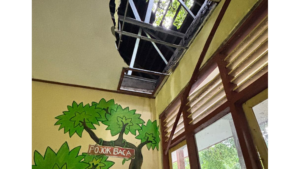
Sintya notes that cultural rituals, such as the kecak dance at Uluwatu and the Melukat water purification ceremony at the Tirta Empul temple, both very popular with tourists, impose pressure on the local community to further prioritise cultural preservation over other needs.
As a result, economic contributions from hotels, resorts and restaurants are used for the funding of cultural and religious practices, rather than for infrastructure.
“The Balinese government prioritises the funding of areas with heavy tourism activity,” she says. Remoter areas are often left with fewer public services, which exacerbates this urban-rural gap.
Sintya, however, remains optimistic about Bali’s future, pointing to the growing trend of “regenerative tourism” – in which tourism actively helps or improves the destination – that is slowly shifting the industry landscape.
View this post on Instagram
Kaura and regenerative tourism
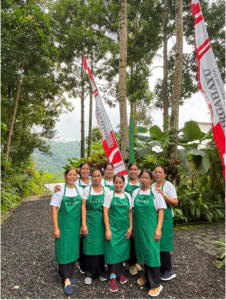
Local women who run a cooking class at Kaura
An example of this is Discova’s own initiative in Manggis, launched in 2019. To boost tourism in an otherwise overlooked area while uplifting the local community, Discova, in collaboration with Thailand-based Cross Hotels & Resorts, set up Kaura. This is a small-scale retreat for tourists that “blends eco-conscious hospitality with authentic cultural experiences”.
Sintya distinguishes community-based tourism from mainstream holidaymaking, which she describes as “extractive” by nature. Unlike most branded luxury resorts, many of which siphon profits to overseas investors, Kaura reinvests in the area it occupies, making the local community its top priority.
It started with repairing the village’s damaged irrigation system used for rice farming. The idea is that in the next ten years Kaura will generate $3m for the community through wages and land leases rather than cash handouts, which they believe creates disincentives and over-reliance on external aid. Instead, their approach focuses on capacity building.
A key challenge faced by the community is the lack of opportunity, which has created a brain drain as young adults are encouraged to leave for more lucrative jobs in urban centres or on cruise ships.
One idea is to support local entrepreneurship while fostering financial independence. Kaura also set up a community learning hub, so that locals can learn English – an invaluable skill if they want to access opportunities beyond their village.
Sintya runs workshops with villagers to help them diversify their skills, so that they can find jobs in restaurants or local crafts, for example, rather than labour-intensive areas such as farming and construction.
“Equipping villagers with the skills and mindset to participate in the tourism sector allows them to critically evaluate investors and choose partnerships that are beneficial to the community, and draws the focus out of profit,” says Sintya.
In 2024, the Indonesian Ministry of Culture and Tourism launched its “Wonderful Indonesia #KeepTheWonder” campaign, inviting tourists to make a net positive contribution to efforts in restoring and conserving the local environment and culture, a sign that regenerative tourism is slowly growing.

Edited by:

© 2026 The Oxford School for the Future