



17-year-old Arnav investigates governance and elections in post-Maduro Venezuela
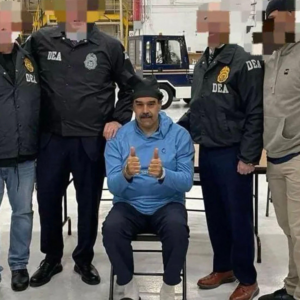
On 3 January, the United States launched a military operation inside Venezuela that resulted in the capture of the country’s leader, Nicolás Maduro, and his wife, Cilia Flores. Both were transferred to US custody and flown to New York City, where they now face federal criminal charges including narco-terrorism conspiracy, cocaine importation conspiracy and weapons-related offences.
Washington’s view is that Maduro does not enjoy sovereign immunity from prosecution under US law. Multiple foreign governments – including the United States and several European and Latin American states – have declined to recognize Maduro as Venezuela’s legitimate leader following disputed elections in 2024.
Maduro has pleaded not guilty to the charges, saying, “I am president of the republic of Venezuela, and I am here, kidnapped, since Jan. 3.”
Harbingers’ Weekly Brief
Subscribe to the Harbingers’ Weekly Brief, a newsletter written by the editorial board of Harbingers’ Magazine, the world’s youngest newsroom, delivered to your inbox every Monday morning.
![author_bio]()
![author_bio]()

The removal of a sitting leader via a foreign military operation is without precedent in Venezuela’s history and has left the country’s political landscape abruptly unsettled.
Who is governing Venezuela?
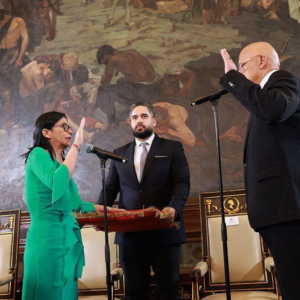
Delcy Rodríguez – the former vice president – was sworn in as acting president following an order by Venezuela’s Supreme Court to ensure continuity of the executive branch. She is operating alongside senior figures from the ruling United Socialist Party of Venezuela (PSUV) who retain control over key institutions, including interior minister Diosdado Cabello, defence minister Vladimir Padrino López and National Assembly president Jorge Rodríguez.
President Trump, speaking on the day of Maduro’s capture, said the US would oversee Venezuela’s transition.
“We are going to run the country until such time as we can do a safe, proper, and judicious transition,” Trump said at a press conference.
President Trump’s remarks also underscored Washington’s decision not to back opposition leader María Corina Machado, whose coalition claims it won the disputed 2024 presidential election.
In comments following the operation, Trump dismissed Machado as “not respected” inside Venezuela, signalling that the US would work instead with Rodriguez’s interim administration in the weeks to come.
Importance of oil
US policy towards Venezuela has focused on the country’s oil sector, which some claim is central to the country’s economic recovery and stabilisation. The country has the largest proven oil reserves in the world.
President Trump also expressed expectations that major US oil companies would invest “billions of dollars” to repair Venezuela’s oil infrastructure once stability is restored.
In response, the Venezuelan government has approvedreforms to the country’s energy framework that allow for privatisation and foreign investment in an effort to revive production and re-engage international markets.
In a separate move, Jorge Rodríguez, president of the Venezuelan legislature, has also signedinto law an amnesty measure that could lead to the release of hundreds of political detainees – a significant shift in the country, where authorities have long denied holding political prisoners.
Despite these early reconciliation efforts, analysts say relations between Caracas and Washington remain fragile.US officials say they are closely monitoring developments through diplomatic channels and have sent a special envoyto Venezuela, Laura Dogu, with the aim of reopening a US mission after seven years of suspended ties.
Election controversy
Rodríguez is required to call a presidential election within 90 days, according to the Venezuelan constitution. However, the path back to competitive, credible elections remains uncertain and is not guaranteed.
The Barbados Agreement was signed in 2023 by the Venezuelan government and the opposition with the aim of setting conditions for free and fair elections. However, critics argue that key provisions were not implemented, citing interference with the electoral authority and restrictions on access for international observers.
Also, María Corina Machado – who won the opposition’s 2023 primary by a wide margin and was seen as the main challenger to Maduro ahead of the 2024 presidential election – was barred from running after the Supreme Court upheld a ban on her holding public office.
A vocal critic of Chavismo (the radical left political movement founded by former president Hugo Chávez), Machado advocated democratic reform and reduced state control of the economy.
View this post on Instagram
The controversy deepened during the July 2024 election. The government-controlled electoral authority declared Maduro the winner with approximately 51% of the vote, despite the opposition candidate Edmundo González being the clear frontrunner.
Opposition leaders rejected the result, and the US, EU and many other countries expressed concern. Protests followed the announcement, and human rights groups reported that more than 2,000 people were detained.
Since then, opposition politicians have faced continued legal and political obstacles: some remain in jail or in exile, and parties face bans or severe restrictions.
Washington’s transition framework
US officials have outlined a three-phase strategy for Venezuela’s future, as articulated by secretary of state Marco Rubio. The approach begins with stabilisation, moves into economic recovery and liberalisation, and culminates in a democratic political transition.
Rubio emphasised Washington’s influence over the interim period: “The bottom line is that there is a process now in place where we have tremendous control and leverage over what those interim authorities are doing and are able to do.”
View this post on Instagram
He added that “this will be a process of transition” and that “in the end, it will be up to the Venezuelan people to transform their country.”
Even so, disputed elections, political restrictions and limited transparency in Venezuela’s electoral process have not increased confidence in the environment for credible voting.
With viable contenders excluded and fundamental electoral freedoms constrained, a fair and competitive transition remains unlikely unless political detainees are released, bans on political participation are lifted and independent electoral oversight and media access are reinstated.
Until meaningful changes take place, Venezuela is likely to remain in a period of institutional limbo – neither on a clear path to political transition nor to stability – effectively leaving domestic and international observers in a cautious game of ‘wait and see’.

Edited by:

© 2026 The Oxford School for the Future