Harbingers’ Magazine is a weekly online current affairs magazine written and edited by teenagers worldwide.
harbinger | noun
har·bin·ger | \ˈhär-bən-jər\
1. one that initiates a major change: a person or thing that originates or helps open up a new activity, method, or technology; pioneer.
2. something that foreshadows a future event : something that gives an anticipatory sign of what is to come.
We and our partners may store and access personal data such as cookies, device identifiers or other similar technologies on your device and process such data to personalise content and ads, provide social media features and analyse our traffic.
There is something slightly ridiculous about being nostalgic for a time you cannot remember. However, Gen Z is doing exactly that.
After walking into any vintage shop or simply scrolling through TikTok for five minutes, you will find just how obsessed our generation is with the late 1990s and early 2000s.
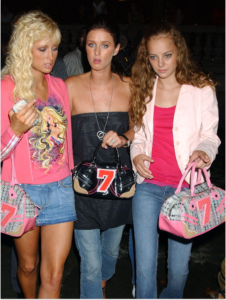
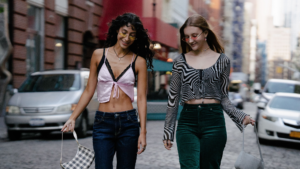
Low-rise jeans, tiny sunglasses, velour tracksuits, rhinestones, disposable cameras, flip phones, CDs and countless more items are now suddenly back to being top fashion trends. Numerous celebrities, including Tyla and Pinkpantheress, follow this aesthetic increasingly often.
The strangest part is that a huge portion of the people participating in this revival aren’t old enough to remember the era they are supposedly nostalgic for. This is a phenomenon called anemoia, a feeling of nostalgia for something you’ve never experienced.
Part of the answer is obvious: it looks good.The Y2K aesthetic is shiny, colourful, excessive and sometimes even a little absurd. But aesthetics alone cannot explain why something from 25 years ago has become so appealing to people who were barely alive at the time. I think the bigger reason is that we romanticise what we don’t have.
Lack of constant availability
One of the most appealing things about the early 2000s, at least from a Gen Z perspective, is how limited everything seems.
Today, almost everything is immediately accessible. We have millions of songs we can listen to whenever we want, streaming platforms for television, instant communication, and easy and quick photography.
Harbingers’ Weekly Brief
Subscribe to the Harbingers’ Weekly Brief, a newsletter written by the editorial board of Harbingers’ Magazine, the world’s youngest newsroom, delivered to your inbox every Monday morning.
See you on Monday!
Ooops - please try again.
Back then, though technology existed, it hadn’t completely taken over everyday life. Phones were just phones before they became cameras, maps, televisions, wallets, news outlets containing the entire internet. Music was something you bought on a CD, movies were on DVDs and not everything lived on just one device.
To someone growing up surrounded by constant digital access, that limitation looks incredibly appealing. It makes everything feel a lot more significant.
The irony is that Y2K culture itself was heavily influenced by new technology. The turn of the millennium caused a fascination with computers, futuristic design and all the huge possibilities of the internet. Metallic materials and all the cyber-inspired visuals were part of genuine excitement about technological progress.
The difference is that technology was still new enough to be exciting. Today, though, it’s so ordinary that we often fantasise about escaping it.
For instance, the use of social media among those aged 16 and over has declined almost 10% from 2022 to 2024 as shown in a survey featuring 250,000 people from 50 countries.
Everything had more personality
There is a perception that back then things used to have more character. Look at old phones, old computers, magazine covers, CD cases, purses, cars or even websites. They weren’t necessarily better designed, but they were often more recognisable.
Nowadays, most things are designed to be rather minimal and clean. We have spent years hearing about neutral colours and “timeless” design. Y2K offers practically the opposite.
Why have a plain black bag when you could have one covered in rhinestones? The excess is a huge part of the appeal. For Gen Z, who were raised with a minimalistic approach to practically every design, Y2K feels like a way of being special and highlighting their personalities.
Big brands are reviving their classic handbag designs from the Y2K era – such as the Prada Re-Edition, Diesel 1DR and Coach Swing Zip bags – while new labels are built on the nostalgia, such as BY FAR’s Rachel baguette and Marge Sherwood’s East-West bowling bags.
More authentic celebrity culture
There is also something fascinating about the celebrities of the Y2K era. Britney Spears, Christina Aguilera, Paris Hilton, Beyoncé and countless others feel so different from what modern superstars feel like.
There were fewer ways to see them. Magazines, television, music videos, paparazzi photographs and award shows were really important. That distance made celebrities feel enormous.
Today, we can watch influencers post TikTok videos from their bedroom and then see them make breakfast the next morning. The boundary between a celebrity and an ordinary person has become much thinner. The early-2000s celebrities often only existed as an image for their audience. And images are incredibly easy to romanticise.
Now, anyone can become famous from posting on social media and it doesn’t really take much genuine talent. That is another part of the appeal of Y2K celebrities. In order to become who they were, they needed to actually stand out. Otherwise, they would simply not be seen. This is what makes the celebrity culture of that era feel much more special.
Britney Spears and Christina Aguilera, for instance, both started performing when they were young children. You had to be in the industry for a long time to slowly build a career. Instant blow-ups were extremely rare.
Low rise jeans and crop tops are back as Gen Z embraces Y2K fashion
There is another reason nostalgia works so well: we get to actually edit history for ourselves. When Gen Z imagines the early 2000s, we’re usually not imagining the entire early 2000s. We’re imagining the outfits, the music videos, the bedroom decor, the flip phones, the celebrities, the CDs… the fun parts.
We’re not nostalgic for everything that actually came with the period. The early 2000s also contained plenty of problems, including ugly cultural attitudes and genuinely serious social issues, such as cruel tabloid culture, misogyny or the “size 0” obsession.
Even the fashion and celebrity culture we’re currently romanticising had darker sides, especially the treatment of women by tabloids and paparazzi. The recent reassessment of stars such as Britney Spears has made some of those aspects much harder to ignore. This is further proof that nostalgia is selective.
Gen Z doesn’t necessarily want the actual life from the early 2000s. They mostly want a polished version of it, which allows them to take the best aspects of back then and now and mix them together.
I’m Sofia Vorobei, with a passion for quality cinema. It all started when I was around eight. While watching one of those Nickelodeon sitcoms, I couldn’t stop thinking about how fun it must be for the actors and how I wished I could be part of something like that. Ever since then, I’ve wanted my life to have something to do with it. I’ve wanted to act, create, write, direct…
In middle school, however, my perception of that changed. I wasn’t eight anymore, and I understood that this path is an uphill battle. It’s demanding, messy, and a bit like a lottery: you either get very lucky and win, or you don’t.
Still, that realisation didn’t push me away from my dream; it was simply a reality check. I began to understand that passion alone isn’t enough — it takes hard work and making the most of every resource available, while continuing to improve without rushing the process. The industry may be unpredictable, but I believe that if you truly put everything into something, it has a way of standing out.
I was born in 2009 in Kyiv, Ukraine, and moved to Vergel, Spain, near Valencia, in 2020.
I joined Harbingers’ Magazine in the summer of 2023 and have since written about the intersections of culture, creativity and society. My work with the magazine led to my appointment as Culture Section Editor in March 2025.
I also serve as Afghanistan Newsroom Editor, roles I continue to hold in 2026, helping shape the magazine’s cultural coverage and coordinate reporting within the newsroom.
🌍 Join the World's Youngest Newsroom—Create a Free Account
Sign up to save your favourite articles, get personalised recommendations, and stay informed about stories that Gen Z worldwide actually care about. Plus, subscribe to our newsletter for the latest stories delivered straight to your inbox. 📲
We use cookies to ensure that we give you the best experience on our website. If you continue to use this site we will assume that you are happy with it.