


17-year-old Arnav examines the rival interests standing in the way of lasting peace in the Gulf
The fighting has slowed and flared, ceasefires have been signed and broken, and negotiations have repeatedly come close to producing something more durable. Yet six months after the US and Israel first attacked Iran, lasting peace in the Gulf still looks more like a mirage than a destination.
An interim ceasefire in mid-June appeared to ease tensions, but fighting resumed in early July 2026, as renewed American strikes on Iranian military and coastal targets were met by Iranian retaliatory attacks against US bases and strategic assets across the Middle East.
Washington has since tightened its naval blockade on Iranian ports, while Tehran has asserted “sovereign control” over the Strait, threatening wider disruption to regional energy flows. The effects have been difficult to contain.
Harbingers’ Weekly Brief
Subscribe to the Harbingers’ Weekly Brief, a newsletter written by the editorial board of Harbingers’ Magazine, the world’s youngest newsroom, delivered to your inbox every Monday morning.
![slide image]()
![author_bio]()
![author_bio]()


As of late August, Brent crude – the international oil benchmark – was trading at around $87 per barrel, having briefly crossed $90 as hopes for a US–Iran agreement faded. The price of Brent crude had already gained roughly 24% across July, leaving oil markets unusually sensitive to every new round of strikes, threats and diplomatic movement.
The past six months since the US and Israel attacked Iran on 28 February have shown that the Strait need not close entirely for the consequences to travel far beyond the Gulf. But after repeated ceasefires and renewed fighting, why has lasting peace proved so difficult?
Conflicting agendas
At the heart of repeated ceasefire failures is a larger disagreement over what Iran should look like once the fighting stops.
Washington has pushed for tighter restrictions on Iran’s nuclear programme, guarantees of unrestricted commercial passage through the Strait of Hormuz and limits on Tehran’s ability to use regional military pressure as leverage. US officials have also tied meaningful sanctions relief to verifiable nuclear concessions and stronger international monitoring.
Iran, meanwhile, approaches negotiations from almost the opposite direction. Tehran wants sanctions relief, access to frozen assets, protection from renewed US and Israeli attacks and enough military capability to preserve its deterrence.
It has also resisted proposals it sees as stripping away sovereign control over its nuclear programme, diminishing its influence in the Gulf or leaving the country vulnerable to future intervention.
The two sides are therefore negotiating more than an end to hostilities. Washington wants an Iran with fewer military and regional capabilities; Tehran wants assurances that peace will not come at the cost of its security, sovereignty or political survival.
A wounded Iran
Iran is negotiating from a markedly weaker position than at the beginning of the year.
US and Israeli strikes have killed senior political and military figures – including Supreme Leader Ali Khamenei, whose death also created a major political and constitutional vacuum – damaged nuclear and military infrastructure. The Center for Strategic International Studies (CSIS) estimates that Iran lost the majority of its naval capability within the first ten days of the war.
By mid-April, more than 3,600 people had been killed across Iran, including over 1,200 military personnel. After renewed fighting in July, the the true toll is likely to be higher.

The economic damage has been just as severe. In April, repair costs to Iran’s energy infrastructure alone were estimated at up to $58bn,while Tehran has put the war’s broader economic losses, both direct and indirect, at roughly $270bn,although that figure has not been independently verified.
Iran’s currency, the rial, has fallen to historic lows, reachingtwo million rials to the US dollar on the open market on 27 August. Sanctions and months of disrupted trade have added further pressure to the country’s crippled economy. It has also greatly suffered from inflation, which reached87% in July.
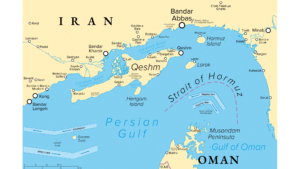
However, Iran still holds one major source of leverage: its ability to disrupt traffic through the Strait of Hormuz. Long held in reserve, that power has now become a central bargaining tool in negotiations with Washington and its regional allies.
A ceasefire without trust or guarantees
Even if Washington and Tehran can agree on the broad outlines of a ceasefire, translating those commitments into lasting peace has proved considerably harder.
Previous agreements have unravelled amid accusations of violations, disagreements over implementation and renewed military escalation. With each breakdown, both sides have gained another reason to doubt the other will honour the next deal.
The pattern has become increasingly familiar over the past six months:
- 12 April – Islamabad peace talks collapse After more than 20 hours of direct negotiations between delegations led by US vice president JD Vance and Iranian parliamentary speaker Mohammad Bagher Ghalibaf, talks ended without agreement over Iran’s nuclear programme.
- 17 June – Interim Memorandum of Understanding (MOU) signed Washington and Tehran signed a 14-point agreement establishing a negotiation framework over key issues, but it dissolved within weeks followed by renewed military activity.
- 7–12 July – Fighting resumes Following attacks on commercial shipping in the Strait of Hormuz, the US resumed large-scale strikes on Iranian targets – effectively ending the latest ceasefire.
- 25 August – US imposes economic sanctions The US announced Operation Economic Outcast, cutting off financial lifelines for Iran and threatening secondary sanctions against countries and companies that continue to do business with Tehran.
Nor is this simply a two-sided conflict. Israel has its own security priorities, and its military decisions have repeatedly altered the pace of US–Iran negotiations.
Oman, Qatar and Pakistan have helped keep diplomatic channels open, but their influence has limits. They can bring the sides back to the table, keeping channels open and proposing temporary ceasefire frameworks, but not necessarily keep them there.
View this post on Instagram
What happens next?
The next phase of the conflict may depend less on securing another ceasefire than on changing the incentives that make escalation worthwhile. Any durable settlement would need to give each side more to gain from restraint.
Iran has lost the majority of its naval capability and seen missile attacks fall by around 90%, but still retains enough asymmetric capacity – notably with its ability to control passage through the Strait of Hormuz – to meaningfully disrupt trade.
Washington, meanwhile, wants verifiable limits on Iran’s nuclear programme and the delimilitarisation of the Strait of Hormuz. Israel continues to judge Iranian military and nuclear capacity through its own security lens.
Gulf states have perhaps the clearest economic incentive for stability. Traffic through the strait – which carries roughly 20% of global oil consumption – has fallen from roughly 130–140 vessels a day to as few as 11. As past disruptions have shown, prolonged instability in the strait can quickly spill beyond the Gulf, pushing up energy and shipping costs and feeding inflation worldwide.
Growing discontent with the conflict’s widening economic costs may also create room for compromise. A settlement linking economic recovery, energy security and military restraint could give each side more to lose by returning to war, though, for now, another cycle of ceasefire, renewed conflict or wider regional escalation remains the more likely outcome.

Edited by:

© 2026 The Oxford School for the Future