



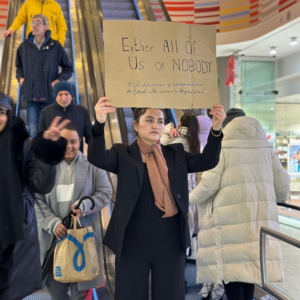
19-year-old Nabila interviews Afghanistani writer and women’s rights activist Yalda Farangis Sawgand
When Yalda Farangis Sawgand, an Afghanistani woman now living in Germany, speaks of exile, she does not frame it as loss alone. She sees it as a bridge between two worlds, where the memories of Afghanistan meet the opportunities of Germany, and where culture, law and civic action converge.
A women’s rights activist, poet and former member of the Youth Parliament (no longer working) and the governing council of the province of Balkh, Farangis has spent her life building spaces for Afghanistani women’s voices – first in her homeland, and now across the diaspora in Germany.
Harbingers’ Weekly Brief
Subscribe to the Harbingers’ Weekly Brief, a newsletter written by the editorial board of Harbingers’ Magazine, the world’s youngest newsroom, delivered to your inbox every Monday morning.
![slide image]()
![slide image]()
![slide image]()
![slide image]()
![author_bio]()
![author_bio]()


“I see myself as a bridge between two cultures,” she told Harbingers’ in an exclusive interview. “One is shaped by historical pain and collective memory; the other offers freedom, opportunity and civic participation. Exile has taught me that this duality is not a limitation, but a chance to create dialogue between Afghanistani women’s lived experiences and European democratic values.”
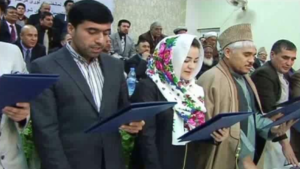
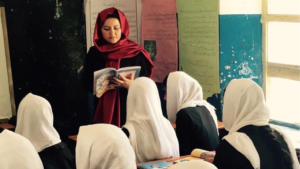
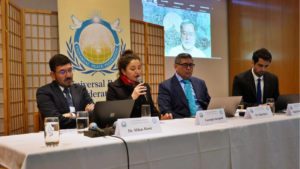
Farangis’s journey began in Afghanistan, where she earned a degree in law and political science. Witnessing the systemic barriers imposed by a patriarchal society, she founded two women’s rights organisations – one in Faryab and another in Balkh – believing that education, culture and law are essential tools for women’s empowerment.
Her work in the media, human rights and literature stemmed from a conviction that public awareness and access to justice are prerequisites for democracy and sustainable peace.

Farangis, who is in her thirties, left Afghanistan in 2015 after being threatened and attacked by the Taliban. She was advised to leave for her own safety, and was granted a visa to live in Germany.
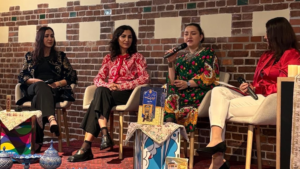
Now based in Kiel, she continues her mission through civil society initiatives such as the Afghanischer Stammtisch,SH organizationand the coalition Don’t Forget Afghanistan.These groups support immigrants from Afghanistan, provide legal guidance and foster solidarity among diaspora communities. She emphasises that integration is only meaningful when immigrants actively participate in decision-making, whether in cultural programmes or civic initiatives.
For Farangis, art and politics are deeply intertwined. “Poetry, storytelling and literature are soft tools for human rights,” she says. “Culture raises awareness, and politics provides the platform to act on it. As a female poet in exile, it is my responsibility to reflect Afghanistan women’s voices in society and defend their rights.”
“Exile is not the end of the road,” she says. “It is a stage in the continuation of social responsibility, a chance to sustain justice, equality and cultural identity using law, literature, and media.”
But being a woman in the diaspora comes with its own challenges. Farangis notes that immigrant women face dual pressures: gender discrimination (within the Afghanistani community) and cultural alienation. She has often confronted stereotypes and reductive assumptions, yet she believes that women’s participation in public life is a measure of social justice. Through media, education and cultural programming, she strives to amplify Afghanistani women’s voices and encourage intercultural dialogue.
View this post on Instagram
Looking ahead, Farangis envisions a diaspora that does not see bicultural identity as a contradiction, but as an opportunity. She wants younger generations of Afghanistanis in Germany to embrace civic engagement while remaining connected to their roots.
Through her work, Farangis shows how diaspora communities can preserve culture, advocate for rights and build meaningful connections across continents. In Germany’s cities – including Hamburg, Berlin and Kiel – she is not only helping Afghanistani women find their voices, but also creating a living bridge between two worlds, where memory, freedom and hope coexist.

Edited by:

© 2026 The Oxford School for the Future