


As a result, traditional media such as radio, newspapers and television are facing many problems. Some people believe such outlets are no longer important. But the truth is, in the complex society of Afghanistan, traditional media is still very vital and should not be ignored.
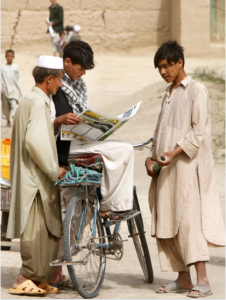
Traditional media still plays a vital role in the complex society of Afghanistan.
In today’s Afghanistan, social media and digital platforms are spreading very fast.
Young people now spend most of their time on Facebook, TikTok, WhatsApp and other apps. These new platforms are easy to use and very fast in sharing news.
Traditional media has always played a unique role in our country. Radio is still the most common source of news for people in villages and remote areas.
Many families do not have smart phones or a strong internet connection, so they depend completely on the radio or TV for information.
Newspapers, even though not as widespread as before, still give depth and background to stories in ways that social media cannot. Traditional outlets also keep a level of trust. People trust them more than random posts on Facebook, because journalists are trained and follow standards of reporting.
However, traditional media faces many challenges today. Censorship and restrictions on free expression have become stronger, especially after political changes. Journalists are under serious risk and cannot always publish the truth.
Harbingers’ Weekly Brief
Subscribe to the Harbingers’ Weekly Brief, a newsletter written by the editorial board of Harbingers’ Magazine, the world’s youngest newsroom, delivered to your inbox every Monday morning.
![author_bio]()


Funding is also a big problem. Without advertising and with a weak economy, many newspapers have closed down and TV channels have reduced their staff. On the other hand, social media platforms are growing quickly and taking the younger audience away from TV and radio. These issues make the survival of traditional media very hard.
Despite this, I still believe that traditional media matters a lot. First, it provides more accurate and reliable reporting compared to the fast-spreading rumours on social media. Second, it protects our culture and traditions by producing news and programmes in Dari, Pashto and other local languages. This role is very important to keep our identity alive.
View this post on Instagram
Third, traditional media supports civic engagement. When people listen to debates on the radio or watch TV discussions, they learn how to think about public issues and also how to hold power accountable. In a country like Afghanistan, where freedom of speech is often under threat, this role is very meaningful.
What needs to be done is to support traditional media in creative ways. Communities can help by listening and buying newspapers when possible. International organisations can provide funding, and training programmes can prepare new journalists to work professionally.
Traditional outlets can also work together with digital platforms, using social media to share their work while maintaining the quality of traditional reporting. These steps will help media survive in a very difficult enviroment.

© 2026 The Oxford School for the Future